Conductive Glass (9500 Series)
.avif)
Conductive Glass (9500 Series)
Standard Engineering Technology's 9500 Series Conductive Glass is a specialist glass lining developed in direct response to documented ignition and explosion incidents in pharmaceutical and chemical manufacturing, where static electricity generated during raw material introduction caused sparks in glass-lined equipment.
Conventional glass is an electrical insulator. The 9500 Series resolves this through volume conduction technology, integrating a dense network of conductive material throughout the glass layer itself. Static electricity is discharged through the glass lining to the steel substrate almost instantaneously, reducing electrostatic charge on the glass surface to under 1% of conventional glass-lined equipment.
Download our brochure for full technical data and performance charts.

Technical Specification
- Electrostatic charge reduction: Less than 1% of conventional glass-lined equipment
- Discharge speed: Virtually instantaneous
- Conduction type: Volume conduction throughout the full glass layer
- Grounding restrictions: None — grounding can be attached at any point
- Spark test voltage: 5 kV AC
- Pinhole testing follows the same methodology as standard glass lining
- No special spark testing apparatus required
- Voltage spreads through the conductive network; current passes through any pinhole to detect defects
- Glass series: 9500
- Available colour: Stansky Blue, code 9520
- Chemical resistance: Good resistance to acids, solvents and powders
- Surface conduction type (competitors): Diffuses static over the surface layer only; grounding is restricted; if the surface layer is lost or worn, the conductive effect is lost
- Volume conduction type — Stanglass 9500: Diffuses static throughout the full glass layer; no grounding restrictions; conductive effect is maintained even if the surface is worn
Dimensions
Supply Options
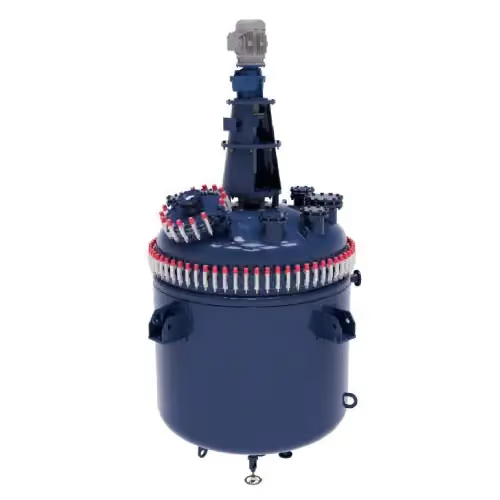
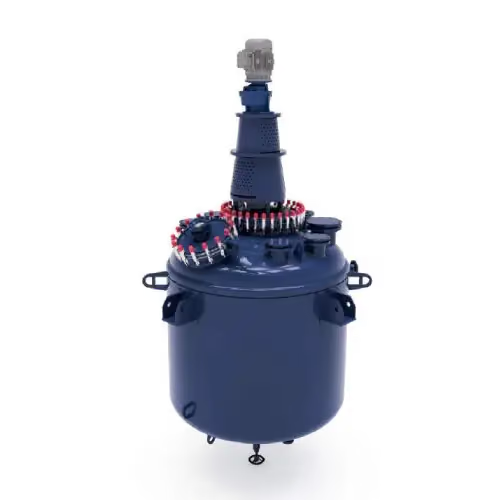
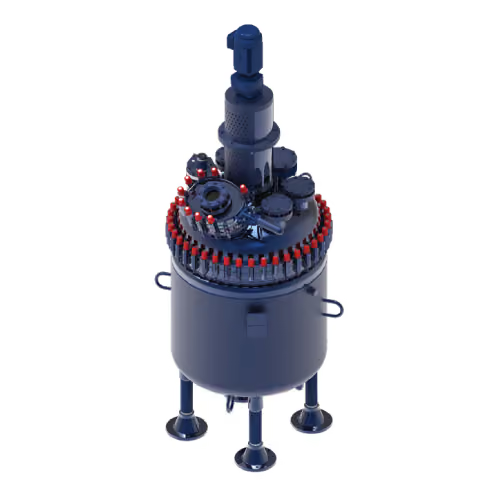
- Glass Lined Reactors — AE, BE, CE, UT and UA series
- Agitated Nutsche Filter Dryers (ANFD)
- Rotary Cone Vacuum Dryers (RCVD)
- Heat Exchangers
- Receivers and Storage Tanks
- Filters and Blenders
- Stansky Blue, glass code 9520
The 9500 Series uses volume conduction technology, so there are no restrictions on grounding attachment points. Standard earthing practice for the installation environment applies. No specialist grounding infrastructure is required beyond standard equipment.
Benefits
- Eliminates static ignition risk: Electrostatic charge is reduced to under 1% of conventional glass, preventing spark generation when introducing raw materials and protecting personnel, equipment and product
- Lasting protection through volume conduction: Conductivity is integrated throughout the full glass layer, not just the surface, so protection is maintained even with surface wear
- No special testing apparatus required: Pinhole testing at 5 kV AC uses the same methodology as standard glass lining, keeping quality control simple and straightforward
- Prevents equipment damage from static: Virtually instantaneous discharge prevents the localised charge build-up that causes glass pinholes and cracks
- No grounding restrictions: Volume conduction allows grounding to be attached at any point on the vessel, providing flexibility during design and installation
- Excellent corrosion resistance: The 9500 Series retains Stanglass's strong resistance to acids, solvents and powders alongside its anti-static properties
- Available across the full equipment range: Conductive Glass is available on all Standard Engineering glass-lined equipment, integrated with GL HAKKO Heat Exchanger technology
Application
- Processes where raw materials generating static electricity are introduced into glass-lined vessels, particularly powder charging
- Handling of low dielectric constant solvents including hexane, xylene, toluene, benzene and heptane
- Pharmaceutical API manufacturing involving flammable solvent recovery, crystallisation and drying
- Chemical synthesis involving flammable organic intermediates in glass-lined reactors
- Any process where conventional glass-lined equipment has experienced static-related incidents, glass damage or regulatory concern
- Pharmaceuticals and API manufacturing
- Chemical processing
- Agrochemicals
- Biotechnology
- Food and Beverage
Compatible Agitator
Accessories





Contact us today for Turnkey Engineering Solutions