Standard Engineering Technology Ltd has extensive experience supporting the fertiliser industry, delivering engineered solutions designed to withstand highly corrosive and demanding process environments. With a strong understanding of fertiliser production technologies and operating conditions, the company has consistently supported clients in achieving safe, reliable, and efficient plant operations.

A key area of expertise lies in the supply of chemically resistant process equipment, including vessels, columns, heat exchangers, and associated components manufactured from exotic alloys and glass-lined materials. These solutions are specifically selected and engineered to handle aggressive media commonly encountered in fertiliser plants, such as acids, chlorides, and high-temperature corrosive fluids, ensuring long service life and reduced maintenance requirements.

In addition, Standard Engineering Technology Ltd supplies a comprehensive range of PTFE-lined valves and instrumentation, providing superior corrosion resistance, chemical compatibility, and operational reliability. These components play a critical role in maintaining process integrity, minimizing leakage risks, and ensuring precise control across fertiliser production units.

Through a combination of material expertise, proven supplier partnerships, and disciplined project execution, Standard Engineering Technology Ltd continues to be a trusted partner for fertiliser manufacturers seeking robust, compliant, and long-term solutions for chemically aggressive processing environments.

Why is corrosion resistance important for equipment used in fertiliser production?
Corrosion resistance is critical for equipment used in fertiliser production because the manufacturing process involves highly aggressive chemicals, acids, and salts that can rapidly degrade standard materials. Without adequate corrosion protection, equipment can suffer premature failure, contamination of the fertiliser product, and unplanned downtime. Corrosion-resistant materials, such as glass lined steel, protect the underlying structure from chemical attack, extend equipment service life, and reduce maintenance costs. This reliability is essential for maintaining safe operation, consistent product quality, and efficient, uninterrupted fertiliser production.
How do fertilisers improve soil fertility and crop yields?
Fertilisers improve soil fertility and crop yields by replenishing essential nutrients that plants need for healthy growth and development. Over time, crops naturally deplete nutrients such as nitrogen, phosphorus, and potassium from the soil, reducing its ability to support strong plant growth. Fertilisers restore these nutrients, helping plants develop stronger roots, improved leaf growth, and higher resistance to stress and disease. By ensuring crops receive balanced and readily available nutrition, fertilisers enhance overall plant health, increase productivity, and support consistent, high-quality agricultural yields.
What is Fertiliser?
Fertiliser is a natural or manufactured substance added to soil or plants to supply essential nutrients that promote healthy growth and improve crop yield. It typically provides key elements such as nitrogen, phosphorus, and potassium, along with secondary nutrients and trace elements required for plant development. Fertilisers are used extensively in agriculture, horticulture, and landscaping to replenish nutrients depleted from the soil, enhance plant strength and productivity, and support sustainable food production across a wide range of growing conditions.
Why is Glass Lined Equipment used in the Fertiliser Industry?
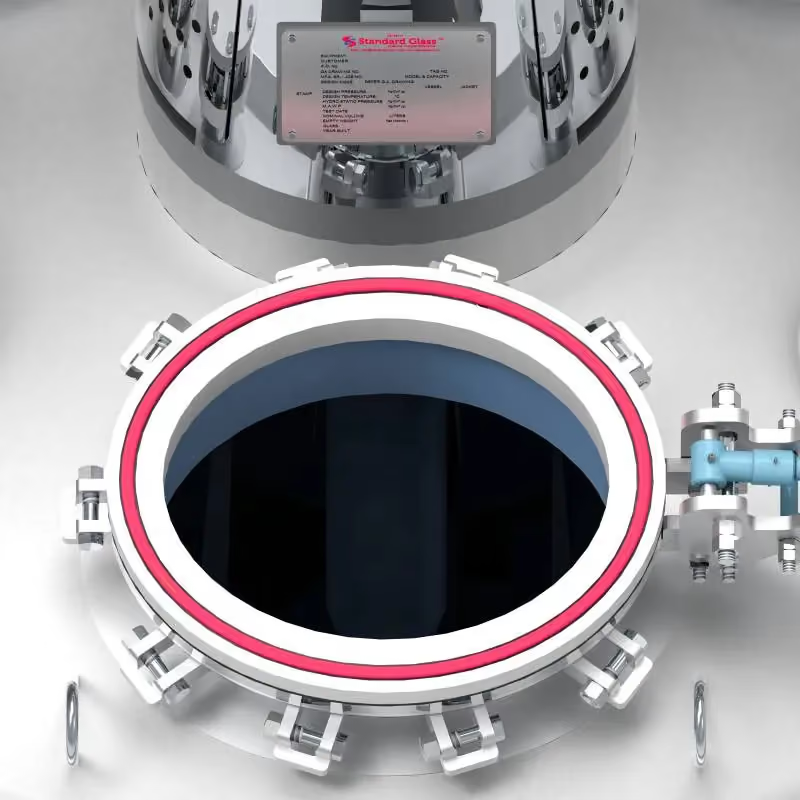
Glass lined equipment is used in the fertiliser industry because it provides exceptional resistance to corrosion from the highly aggressive chemicals, acids, and process conditions involved in fertiliser production. The glass lining forms an inert, non-reactive barrier that protects the underlying steel from attack by substances such as phosphoric acid, sulphuric acid, and various salts, helping to extend equipment life and reduce maintenance downtime. In addition, the smooth glass surface prevents product contamination, minimises build-up and fouling, and supports consistent process performance, making glass lined equipment a reliable and cost-effective choice for demanding fertiliser applications.

More Industries

Browse all Industries

Contact us today for reliable glass lining and turnkey engineering solutions for pharma and chemical industries